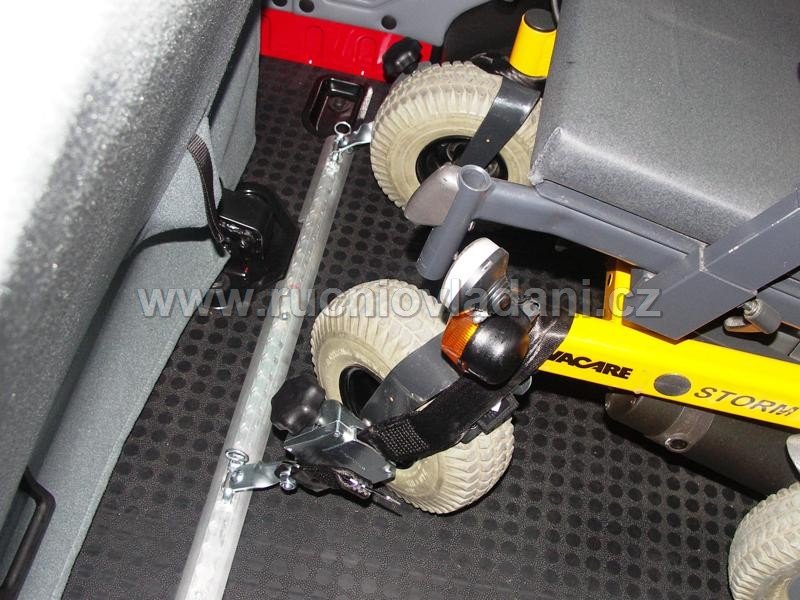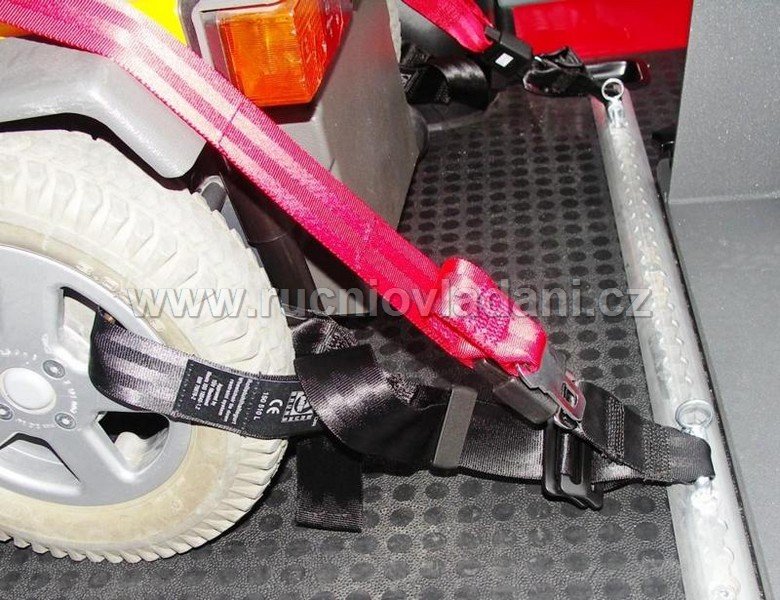
In cars with larger luggage space (e.g., Citroën Berlingo), we install advanced anchoring systems on the floor. This allows the transportation of a passenger seated in a wheelchair. The passenger is secured during the drive.

The wheelchair, with the passenger seated in it, is fastened using universal anchorage segments that slide into rails fixed to the floor. One rail is positioned in front of the wheelchair and the other behind it. Four segments—two at the front and two at the back—ensure the wheelchair is safely secured during the journey. In addition, the passenger is secured with a two-point seat belt. This system is suitable for both manual and electric wheelchairs.
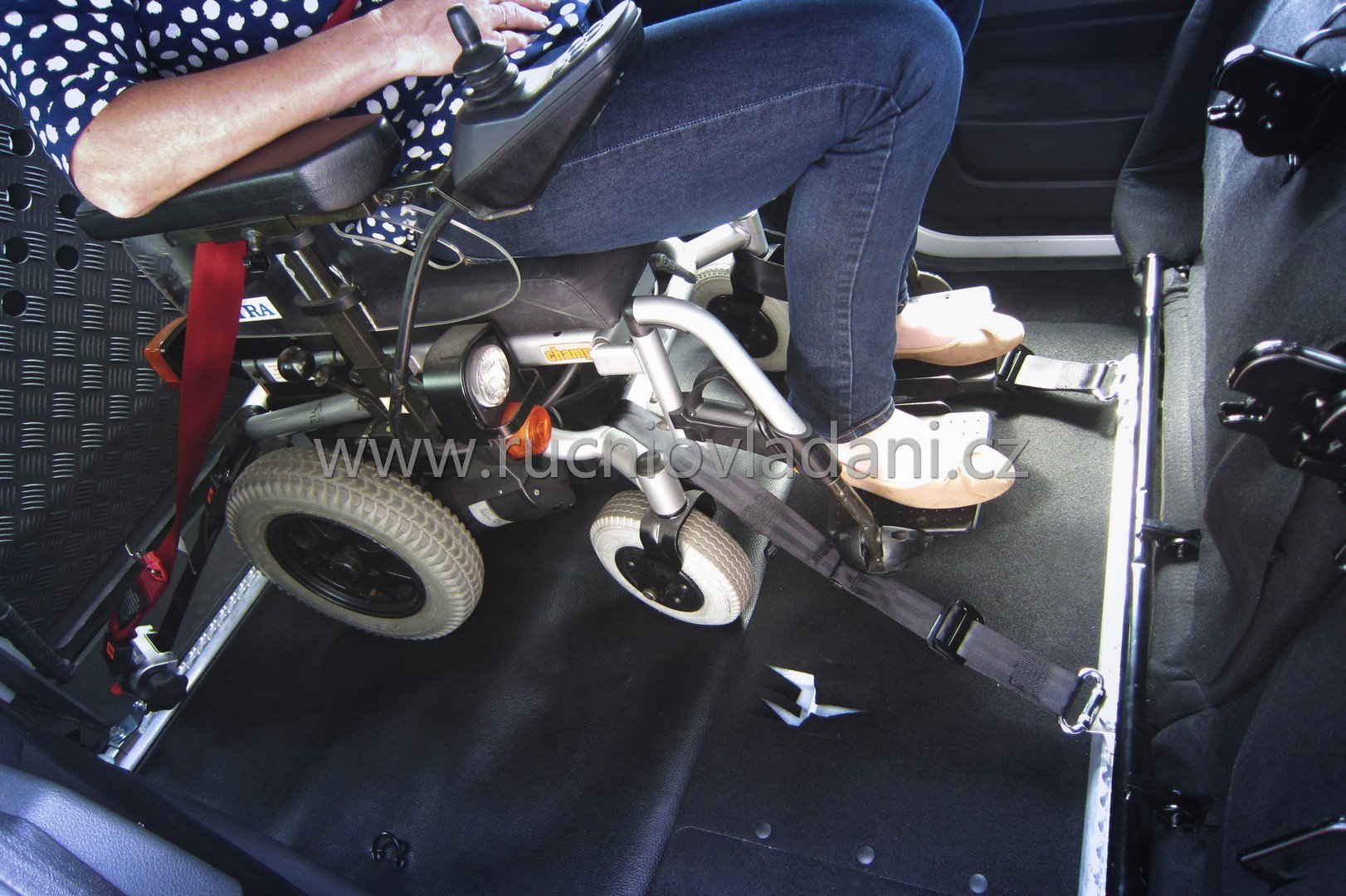
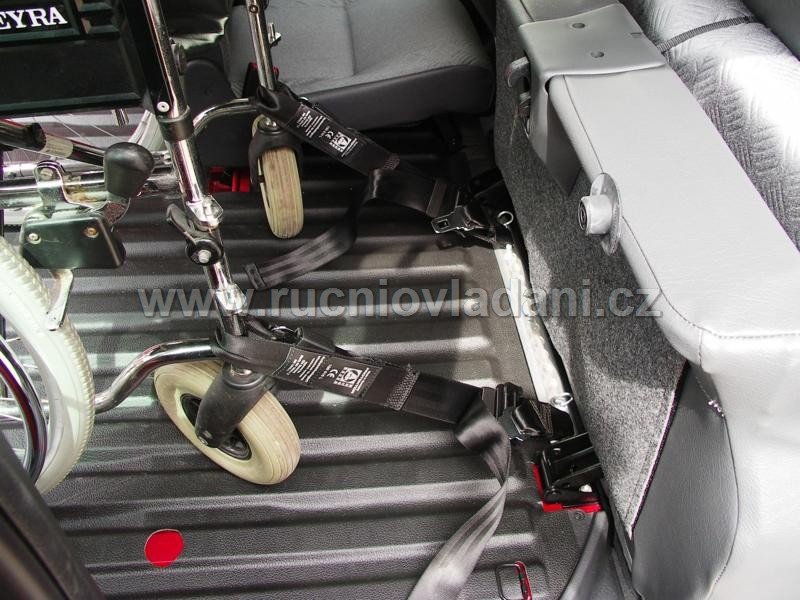
Caution When Using in Small Vans

These anchoring systems are most commonly installed in vans (category N1) with sufficient cargo space. The smallest vehicles suitable for transporting a wheelchair passenger are usually manufacturer-produced high-roof vans. A seated wheelchair user requires a minimum interior height of 130 cm, which small vans (e.g., Citroën Berlingo) do not provide.

Among current production, only the Fiat Doblo (and its twin, the Opel Combo) offer a high roof. In small vans, a wheelchair user can be transported only if their natural position in the wheelchair is more reclining, or if transporting small children. Another option in small vans is a complete floor modification, where the rear section of the floor is lowered. In larger standard vans, interior height is generally not an issue.

Additional Photos

ANCHOR_TOP_TITLE

This website uses cookies

This website is using cookies to provide services, personalize ads, and monitor traffic. By continuing to use this site you are agreeing with usage of cookies. More information.

Settings

Your privacy is important. You can choose from the cookie settings below. More information.